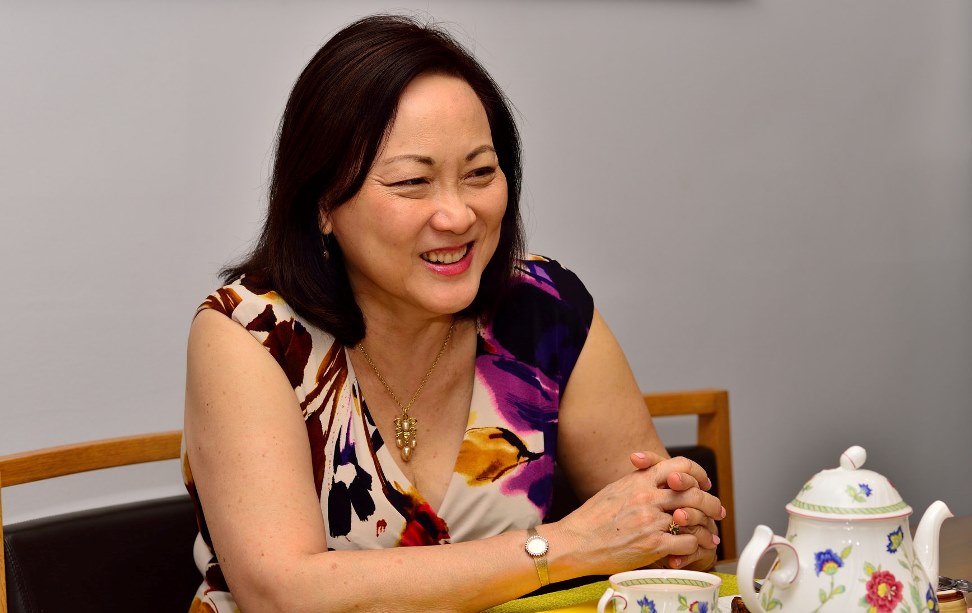
Violinist Lynnette Seah has enjoyed a remarkable career as a classical musician – including 37 years performing with the Singapore Symphony Orchestra (SSO) – and she’s not done yet. In this instalment of our “In the Flow” series, we speak with Lynnette to find out about the secrets to her success and how
she manages to perform at her best.
How long have you been with SSO? And what are some roles and responsibilities you have with the organisation now?
I have been with the SSO since it’s inception, in January 1979. As one of the founding members of SSO, I was the acting leader then, putting things together from scratch, doing the recruiting of musicians and assisting in the development of the organisation. I am now the co-concertmaster of the orchestra, next in line to the conductor.
What does a concertmaster do?
The concertmaster is responsible for coordinating the bowing and articulations of all the strings. I am also in charge of all the other technical aspects of orchestra management, such as communicating with the other section leaders about bowing changes that may occur during the course of a rehearsal.
So you manage that whole section as well as the whole orchestra?
To a certain extent, yes, we as the concertmasters are mostly in charge of the entire orchestra. However, I would like to see it as more of a musical leadership, rather than management per se. We have the responsibility to ensure that the strings play as one voice. We also have the authority in expressions and use that authority to convey the conductor’s ideas about the music to the rest of the orchestra.
What is the greatest challenge of your position as a co-concertmaster?
The greatest challenge would be passing on the conductor’s concept and inspiring others to play to their best ability, as well as ensuring everyone has the same musical style and ideas.
How did you get into the musical industry?
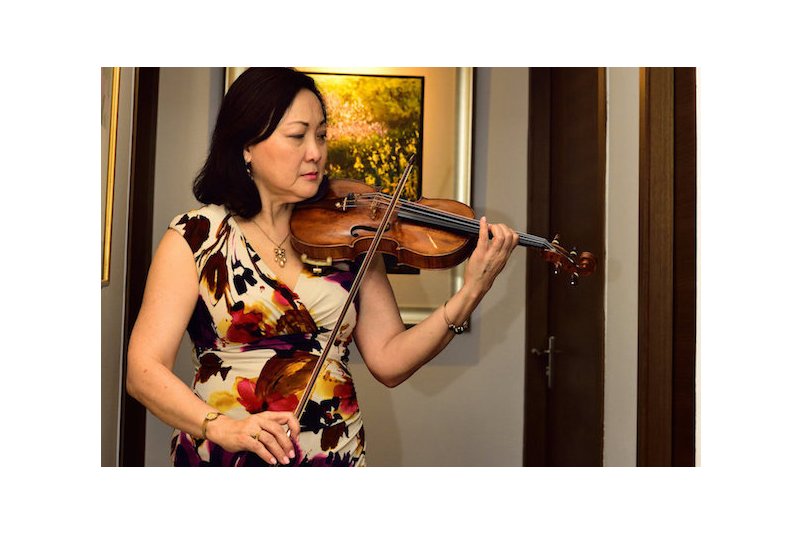
My mother was a concert pianist. She taught me piano when I was five and I started the violin a year later with Goh Soon Tioe and later with Alphonso Anthony. My mother was the one who had instilled in me the discipline to practice music every day. Usually one hour on the piano and one hour on violin every day. When it comes to musical exams, I always did better on the violin. When I was 15, I represented Singapore in the Southeast Asian Violin Competition, and won myself a scholarship to study at the Hannover Hochschule for Music in Germany for two years. That more or less carved out my destiny to be a violinist.
How much of an effort is required to attain mastery at your level?
It takes years and years of practice. I practiced eight hours a day when I was in Germany. But having said that, it is not enough that you just practice the same piece over and over again. Even now when I play a piece of music I played 10 years or even just one year ago, they sound different. There is always something you would find different in the same piece of music, which is why I think you must allow yourself to learn to be in the moment and appreciate that the music you are playing now is the result of your own life experiences and emotional ups and downs.
Most classical musicians, like me, are more introverted. The grandest expression from us is when we play; the music comes out and usually the music speaks louder than our words. Unlike jazz and rock musicians, where everything is out there for them, we have to search deep within ourselves first, feel the emotion, practice with it and then play it in front of an audience. So, to me, there is not a one size fits all solution. It is simply a lifelong process, a journey that never ends.
What motivates you to keep doing what you are doing?
Music gives me a high level of satisfaction and emotional fulfilment. There is not one performance I do not enjoy. I can always pour my heart out; give each piece 150% of myself. Furthermore, it is therapeutic. It doesn’t matter how I feel on that day – whether I am happy or sad, or even if I am down with a cold, feeling really miserable – everything turns beautiful when the music starts. I definitely feel better after I play. It is my true enjoyment in life.
I reckon that music is a talent and gift given to me by God and therefore I also think it is my duty to continue doing what I am doing so that I can pass it on to the future generations. That is why I do teaching as well.
What is some of the advice you would like to give to Singaporeans?
It is very important to have some sort of an art form, like music, in their life so as to balance out the economic and academic stress we are all facing these days. Singaporeans can learn that it is like a form of active meditation. When I play music, my emotions, spirituality and mind are combined to produce something really special, like a nice melody – something that will have an unexpected impact on someone else’s life.
I really wish for our society here in Singapore to have that element in their children’s developing lives. I hope parents will find a good teacher that will nurture their kids to inculcate their love for art because I think ultimately that will make them so much more compassionate and sympathetic to those who have less, and also to become more sensitive to the rest of the world because art and music are universal. It is not something that you can say, “It’s mine and you can’t have it”. Music is pure, open and honest, like religion and values.
When you are doing something, do you devote yourself entirely to it?
Yes, absolutely. I believe that how you make yourself better is by being aware of how you get from step 1 to step 289 or step 1,000. Each step is a process of developing your own mental discipline, mental concentration and mental stamina. Like having the discipline to set aside the time to practice every day, being focused and not becoming distracted by social media or other things when you are practicing, and keeping at it despite being tired.
What do you do to manage performance jitters?
Before I start playing, I will try to let myself into the zone in which I can immerse my whole being into that piece I am about to perform. I will then try to overcome the jitters by converting those nervous energies into those that I can use for my concentration.
You have accomplished a lot over the years. What are some unfulfilled goals or aspirations as a performer?
I am actually pretty happy and satisfied with what I have achieved so far, as well as where I am right now. I still look forward to every performance that is ahead of me, but I think I’m at the stage where I want to relax more too.
What are some performances we can look forward to in 2016?
SSO will be having some of our orchestra tours to places like Germany and Amsterdam in the month of May. We also had our 37th anniversary concert in Singapore on January 29, with pianist Melvyn Tan.
(Check out their schedule via http://www.sso.org.sg/whats-on.php?CategoryID=294)
You have a private dining event every month don’t you? Can you tell us more about it?
Yes, I do! To me, music and food have always been a parallel. Music is food for the soul and cooking is food for the body. The two make up the complete nourishment. Moreover, I enjoy cooking for my friends, family and even strangers who just want to try my cooking! Life is truly about sharing, not holding onto your own skills. You can find out more about my cooking at lynnetteskitchen.com.
Thank you for sharing your insights with us, Lynnette!
Oh, and here’s the video of Steve Jobs introducing Lynnette!