Managers are often promoted because they know how to solve problems, make decisions and deliver results. As their responsibilities grow, however, a leadership style built mainly on providing answers can become a bottleneck. The team waits for direction; the manager carries more of the thinking; capable people have less room to grow.
A coaching approach offers another way to lead. It helps managers create the conditions for people to think more clearly, take responsibility and build confidence—without asking the manager to give up accountability or standards.
The central idea: A good manager creates clarity, trust, accountability and growth through others. Coaching skills strengthen that work; for people ready to develop professional coaching capability, TPC offers a structured learning pathway.
Why Managers Need a Coaching Approach
The pace and complexity of work mean that one manager cannot hold every answer. Leadership coaching for managers helps turn ordinary conversations into moments of learning, ownership and better judgement.
It is not softer management. Managers still set expectations, make decisions and address performance. The difference is that, where appropriate, they begin by helping people examine the situation, think through options and commit to a next step.
What Changes When a Manager Leads Like a Coach
A manager who leads like a coach shifts the conversation from checking activity to creating clarity. Instead of only asking, “Have you completed it?”, they may ask what outcome the person is aiming for, what barriers they can see and what support would be most useful.
That shift develops judgment and confidence while keeping the work connected to results. It also gives managers a more complete view of what is happening in the team.
What Makes a Good Manager?
A good manager creates clarity, trust, accountability and growth. They translate organisational priorities into meaningful work, make expectations visible, make decisions when needed and help people perform at their best.
Strong management balances results with relationships. It means prioritising, delegating, following through, listening well, addressing issues early and helping people grow. Coaching leadership strengthens this work because it holds responsibility and development together.
From manager to coach
- From giving the answer to helping people develop their own sound answer.
- From checking activity to clarifying outcomes, priorities and accountability.
- From solving every problem alone to building team capability over time.
- From a one-way update to a two-way conversation that includes reflection and choice.
Four Coaching Skills Managers Can Practise
Coaching is a discipline, but managers can start with practical skills straight away. The goal is not to turn every conversation into a formal coaching session. It is to make everyday leadership conversations more curious, focused and developmental.
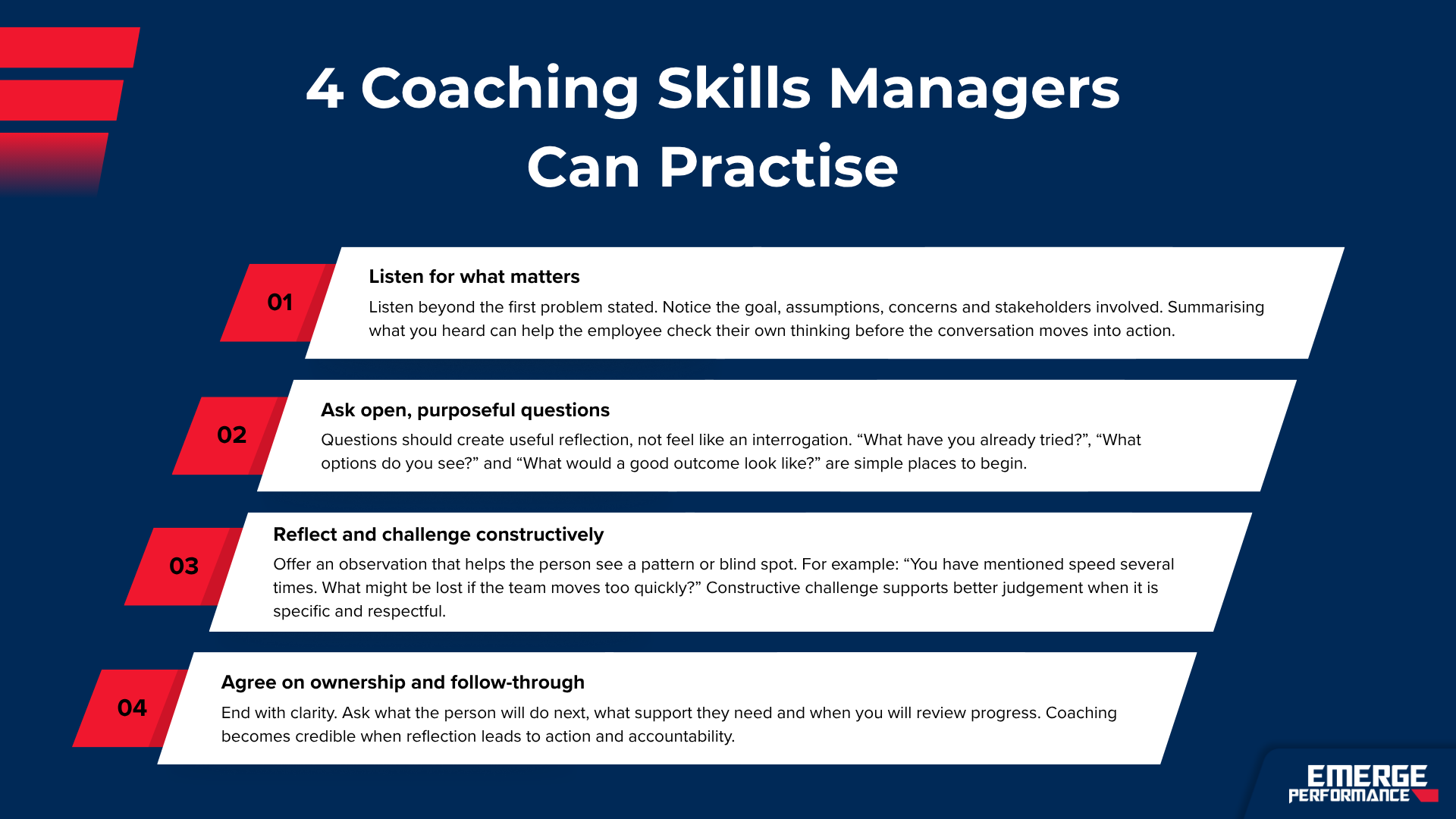
Four practical coaching skills that strengthen everyday leadership conversations.
Listen for what matters
Listen beyond the stated issue. Notice the goal, assumptions, concerns, stakeholders and emotions involved. Summarise what you hear so the person can clarify their own thinking.
Ask open, purposeful questions
Questions are not an interrogation. They help people think. Useful examples include: “What have you already tried?”, “What options do you see?” and “What would a good outcome look like?”
Reflect and challenge constructively
Managers can offer observations that help someone see patterns or blind spots. For example:
“You have mentioned speed several times. What might be lost if the team moves too quickly?”
Agree on ownership and follow-through
End with clarity. Ask what the person will do next, what support they need and when you will review progress.
When Coaching Is Not the Right Response
Coaching is not always the right leadership response. Be more direct when there is a safety risk, a crisis, a compliance requirement, a decision that sits with the manager or a new employee who needs clear instruction.
A useful rule is to be clear about the non-negotiables, then coach where choice and learning are possible.
A Practical Coaching Conversation Framework
Use this five-question structure to guide a short coaching conversation:
- What outcome are you aiming for?
- What is happening now?
- What options do you see?
- What will you do next?
- What support or accountability would be useful from me?
The quality comes from listening carefully, allowing time for thinking and resisting the urge to solve the problem too early.
How to Build a Coaching Culture
Coaching cultures develop when leaders and managers are given time to practise, reflect with peers and receive recognition for building capability—not only for delivering immediate results.
The ICF highlights capabilities such as active listening, powerful questions and creating awareness. Not every manager needs a formal coaching accreditation, but a shared language and consistent practice can improve the quality of leadership conversations across an organisation.
Emerge Performance supports leaders and organisations to build these capabilities around real business priorities, operating routines and team experiences.
From Manager to Professional Coach: The TPC Pathway
The Performance Coach (TPC) is Emerge Performance’s ICF-accredited professional coach training pathway. It is designed for people who want to develop strong coaching capability and, if desired, work towards an ICF credential.
TPC Level 1 provides a structured foundation and a pathway towards ACC. The programme includes 60+ hours of coach education, 10+ hours of mentor coaching, observed coaching with feedback, group supervision and live practice. ConveraLab gives participants realistic coaching conversations and space to reflect on their approach.
TPC Level 2 Bridging supports coaches progressing towards PCC, while Coaching Village creates ongoing peer connection and learning.
Key Takeaways
- Coaching leadership helps managers grow people while maintaining clarity, performance and accountability.
- The four core skills are listening, purposeful questions, constructive reflection and clear ownership.
- Coaching does not replace direction in urgent, safety-critical or compliance situations.
- A coaching culture grows when leadership conversations, systems and recognition reinforce capability-building.
Frequently Asked Questions
What is the difference between a manager and a coach?
A manager is responsible for outcomes, priorities and performance. A coach supports a person’s thinking, learning and ownership. A manager with coaching skills blends both roles appropriately.
Can managers use coaching skills without a qualification?
Yes. Managers can use coaching skills in everyday leadership conversations. Formal training can help them apply the skills more deeply and consistently.
What are good coaching questions for managers?
Questions that clarify the outcome, explore options and agree a next step work well: “What outcome are you aiming for?”, “What options do you see?” and “What support would be useful?”
Can a manager coach a poor performer?
Yes, alongside clear expectations and evidence. Coaching can explore barriers, options and ownership, but the manager remains responsible for the performance process.
What makes a good manager?
A good manager creates clarity, trust, accountability and growth. They make priorities and success measures visible, address obstacles and help people develop sound judgement.
What is the job of a manager?
A manager turns organisational goals into focused action: setting expectations, allocating work, making decisions, managing performance and creating a healthy environment for delivery.
How can I develop my management skills?
Practise, seek feedback and reflect. Clarify priorities, delegate outcomes rather than only tasks, listen before advising and review what is working. TPC Level 1 can deepen coaching capability.
Why is it important to improve management skills?
Managers shape people’s daily experience of work. Strong management improves alignment, ownership, problem-solving and growth while reducing dependence on one person for every answer.
Ready to develop your coaching capability?
Build practical coaching skills and begin your pathway towards the ICF ACC credential with TPC Level 1.
Sources and Further Reading
- International Coaching Federation — coaching competencies and credentialing standards.
- Emerge Performance: The Performance Coach Level 1.