Train Toward Your ICF ACC Credential

The Performance Coach Level 1 is an ICF-accredited coach-training programme that builds real coaching confidence through hands-on practice, mentor support, and a clear pathway to your ACC credential—typically completed in 6–8 months.

3D illustration of an online coaching session with DISCO LMS and ConveraLab for TPC Level 1
icfLevel 1 Accredited Coach
Training Programme
60+ hoursCoach education
10+ hoursMentor coaching
5 sessionsObserved coaching practice
6–8 monthsTraining duration

Knowing coaching is not the same as being able to coach.

The Performance Coach (TPC) Level 1 goes beyond coaching theory. This ICF-accredited coach training programme helps you develop practical coaching skills through real practice, feedback and reflection, so you can coach with greater confidence in real conversations.

Explore how you’ll learn

Aspiring Professional Coaches

You want to build practical coaching skills and work towards your ICF ACC credential.

Leaders & Managers

You want to use coaching skills to lead better conversations, develop people and strengthen your leadership.

HR & L&D Professionals

You want practical, ICF-aligned coaching skills you can apply to people and leadership development in your organisation.

Professionals Exploring Coaching

You’re considering coaching as a new career, an additional professional skill, or the next step in your development.

Coaching Skills You’ll Develop in TPC Level 1

By the end of the programme, you’ll be able to:

Lead a Complete Coaching Conversation

Structure a coaching conversation from opening to meaningful action.

Build Trust & Psychological Safety

Create the conditions for open, honest coaching conversations.

Listen Beyond the Words

Notice what’s said, unsaid and emerging in the conversation.

Ask Questions That Deepen Awareness

Use thoughtful questions to help people reflect and discover new perspectives.

Coach Real-World Situations

Apply your coaching skills with confidence across different conversations and challenges.

Coach in Line with ICF Core Competencies

Develop your coaching practice around ICF standards.

Hear from our graduates

Your path to ICF ACC

Your pathway to the ICF ACC Credential: complete TPC Level 1, build your coaching experience, then apply to ICF for your ACC credential.

1

Complete ICF Level 1 Coach Training

Complete TPC Level 1 with 60+ coach education hours, 10 mentor coaching hours and a performance evaluation.

2

Complete 100 Hours of Coaching Experience

Build 100 hours of coaching experience through real client coaching and continued practice.

3

Apply & Pass the 60 Question ICF ACC Exam

Submit your ICF ACC application and complete the 60-question ACC Exam as part of the credentialing process.

4

Earn the ICF ACC Credential

Once all ICF ACC requirements are met, you can earn the Associate Certified Coach (ACC) credential.

Explore how you’ll learn

Note: The ACC credential is awarded by the International Coaching Federation (ICF). Completing TPC Level 1 supports the education and mentor coaching requirements but does not itself award the ACC credential.

How you’ll learn

Coaching is learned through practice.

Our experience is a continuous cycle of learning, practice, feedback, reflection and real-world application.

LearnLive interactive sessions
PractisePeer coaching and ConveraLab scenarios
Be observedFive observed coaching sessions
Receive feedbackMentor coaching and supervision
ReflectJournaling and self-awareness
ApplyReal conversations in real situations

What makes TPC Level 1 different?

More than a certification. A real coaching experience.

Practice is built into the programme

Live practice, observed sessions, feedback and reflection are part of the learning journey—not optional extras.

You don’t practise alone

Mentor coaching, supervision, peer coaching and The Coaching Village provide ongoing support.

Grounded in human performance

Insights from performance psychology, leadership and high-performance environments deepen your practice.

Practice beyond the classroom

ConveraLab offers more realistic coaching practice and personalised feedback between live sessions.

Programme brochure

Want the full programme details?

The brochure-download form will be connected here after its final fields and delivery method are confirmed.

Speak to an advisor in the meantime

Programme modules

What you’ll explore along the way.

01 — Introduction to coaching

Discover what makes coaching different from giving advice and build your foundation in coaching ethics and ICF competencies.

02 — Principles of human performance

Explore the behavioural and performance foundations that inform meaningful coaching conversations.

03 — Unlocking effective agreements & contracting

Learn how to establish clarity, focus and shared responsibility in coaching relationships.

Live online cohorts

Find a cohort that fits your schedule.

Choose the language and dates that work for you. Sessions are delivered live online, with flexible support if you miss a class.

What’s included

60+ education hours
10 mentor coaching hours
5 observed coaching sessions
Performance evaluation
Group supervision
Peer practice
ConveraLab access
Lifetime Coaching Village access

Cohort dates, fees and delivery language will be confirmed before publishing.

Frequently asked questions

Questions people ask before joining.

What is The Performance Coach Level 1?

It is an ICF-accredited coach-training programme designed to develop practical coaching skills through live learning, practice, feedback and mentor coaching.

Does completing TPC Level 1 make me an ICF ACC coach?

No. It supports the education and mentor-coaching elements of the pathway; ICF awards ACC only after all its requirements are met.

Is this suitable for leaders and HR professionals?

Yes. The programme is designed for people who want to use coaching to develop others and lead more effective conversations.

Do I need coaching experience before joining?

No prior formal coaching experience is required. The learning experience builds from core foundations into supervised practice.

How much real coaching practice will I get?

You will practise through live learning, peer coaching, observed sessions and realistic conversations supported by feedback.

About TPC Level 1

Build practical coaching skills that travel into real work.

The Performance Coach Level 1 by Emerge Performance is designed for leaders, HR professionals and developing coaches who want to strengthen how they listen, question, develop people and support performance.

HomeAll InsightsBlogHacking our Autopilot Mode

Hacking our Autopilot Mode

The year-end festivities are upon us, and yet the economic climate remains uncertain with the pace of life accelerating, layoffs increasing, cost of living
continuing to rise and suicide rates creeping up. This is a time typically intended for celebrations, joy and giving, but for some it remains a struggle.
In fact, this can be a time associated with even more stress and disorientation as we find ourselves lost in the shuffle of our relentless, fast-moving
society.

Is there a better way? Or are we going to continue living out our lives like hamsters spinning on the wheel in a race to nowhere?

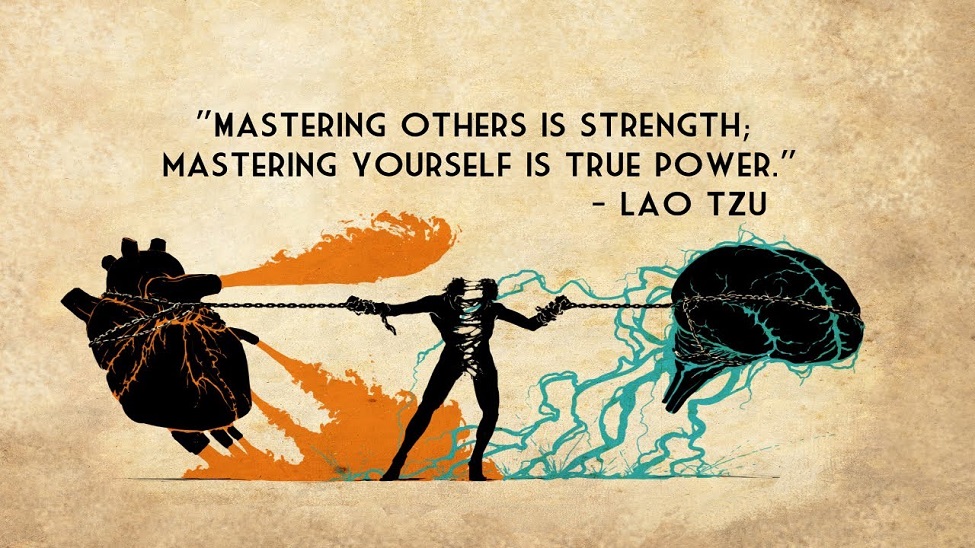
“Knowing others is intelligence; knowing yourself is true wisdom. Mastering others is strength; mastering yourself is true power.” – Lao Tzu

Someone shared this quote with me when I was in Beijing last week delivering a leadership training program. Lao Tzu hit the nail on the head and got me
doing some stock-taking. While we grasp for external relief, coping mechanisms, quick-fix recipes and whatever help we can get to alleviate the modern-day
struggle, transformation begins when we begin the inward trek of mastering self.

We may not be able to change our jobs, our spouses, our bosses or our circumstances, but we can change our perception by looking closely at our “engine”
and illuminating what’s driving it: our “hotspots”, our habitual patterns and reactions, our beliefs, our values, etc.

In other words, we all have some form of behavioural DNA that dictates how we make decisions, behave and relate to the external environment and ourselves.
If we can deconstruct this cycle, perhaps we can hack it and live out our lives with more meaning and purpose. Amalgamating incumbent psychological
models of human behaviour, here’s what I came up with at the airport:
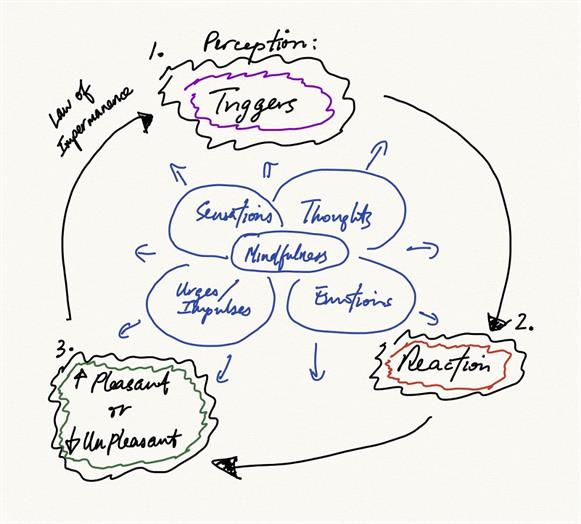
Our Behavioural Cycle

Phase 1:

Our sensory system receives information. Based on our perceptions, we appraise the triggers (stimuli) to kick-start this behavioural cycle.

Perceptions are a function of assumptions, world views and belief systems that operate at a subconscious level – i.e. mental shortcuts.
We use them to organise memories and optimise decision-making. They are all subjective and we all have them.

Triggers are our “hotspots”. They can originate from external sources such as our bosses, spouses or even the weather. Of course, they
can also come from within, such as our ego, our hurt, our disappointment and our desires. All of these can serve as a trapdoor to snap reactions and
activating our “autopilot” mode. Whether a stimulus triggers something is a function of our perceptions.

Phase 2:

Reactions are habitual patterns of behaviour that are evoked in the blink of an eye – they are our autopilot mode. More often than not,
we don’t even realize that we are in autopilot mode. This is a double-edged sword: this mode can protect us and help us cope and survive (e.g. the
fight or flight response), but under constant and persistent activation, it can lead to health issues. For example, my blood pressure tends to increase
when I have an approaching deadline, and over a longer period of time, related health issues could emerge.

Phase 3:

Subconsciously, we react in order to achieve two broad outcomes: to remove or lower an unpleasant experience, or conversely, to increase something that
is pleasant and pleasurable. For example, if we find an experience particularly boring (e.g. meditation), we may go into autopilot mode – even if only
very subtly – by tuning out as a form of coping so as to reduce this unpleasant experience.

Although we struggle to remove ourselves from the present moment to achieve more pleasant outcomes or reduce unpleasant ones, the Law of Impermanence dictates
that life is dynamic, unpredictable, volatile and uncertain. In other words, it is out of our control. So while we struggle to manipulate and shape
the present moment, we find that this is not possible. And this constant striving to achieve what is impossible fuels our perceptions and triggers
(Phase 1) as we enter a new cycle of striving and struggling incessantly and uncontrollably. This is the hamster wheel, and over time, you will wear
out.

A Mindful Interruption

So where does mindfulness fit in? In each phase, our mind-body is constantly interfacing with the present moment by providing various signatures in the
form of how we think, how we feel, how our body responds, and the urges and impulses that show up in the present moment.

To interrupt this cycle, we simply pay attention to how and what our mind-body is saying and doing right now, in a non-judgmental manner. And in doing
so we can find our freedom, as Viktor Frankl puts it: “Between stimulus and response there is a space. In that space is our power to choose our response.
In our response lies our growth and our freedom.”

Mindfulness creates that space for us to move from autopilot mode to consciously choosing our response. So the next time you recognise that you are wrapped
up in the autopilot cyclical mode of life, pick a moment and STOP!

S: Stop

T: Take and track your breath

O: Orientate yourself to your mind-body

P: Proceed and exercise a conscious choice (choose and know that you are choosing)

“Live in the sunshine, swim the sea, drink the wild air.” – Ralph Waldo Emerson


×
Limited Promotion
Receive up to
50% Discount
on The Performance Coach programs

Explore The Performance Coach (TPC), an ICF Level 1 & Level 2 pathway designed to help coaches build a strong foundation and deepen their executive coaching practice.


View TPC Level 1


View TPC Level 2


×
Limited 1-for-1 Promotion
Enrol together
1-for-1 Promotion
One paid enrolment gives you two participant places

Explore The Team Coach (TTC), an
ICF-accredited team coaching pathway
designed to help coaches develop the skills to coach high-performing teams.


View TTC Programme