Assessments & Diagnostics
Leadership Performance Academy (LPA) · Assessments & Diagnostics
See what matters. Focus action where it counts.
We combine fit-for-purpose assessments with expert interpretation to help organisations understand leadership, team and culture dynamics—and turn evidence into focused development, better decisions and meaningful progress.
Why diagnostics matter
Better decisions begin with a clearer understanding of what is happening.
Organisations often have plenty of data, but not always the evidence needed to understand the real performance challenge. The right diagnostic approach can focus attention, reduce assumptions and create a more useful starting point for action.
Focus leadership development
Clarify strengths, patterns, risks and development priorities before investing in a leadership journey.
Understand team performance
Surface the conditions affecting trust, psychological safety, alignment, collaboration and accountability.
Make culture more visible
Explore the beliefs, behaviours and organisational conditions supporting or constraining performance and change.
Observe meaningful progress
Establish an appropriate starting point and review whether learning is appearing in workplace behaviour and practice.
A diagnostic is not the answer by itself. Its value lies in the quality of the question, the interpretation and what people choose to do next.
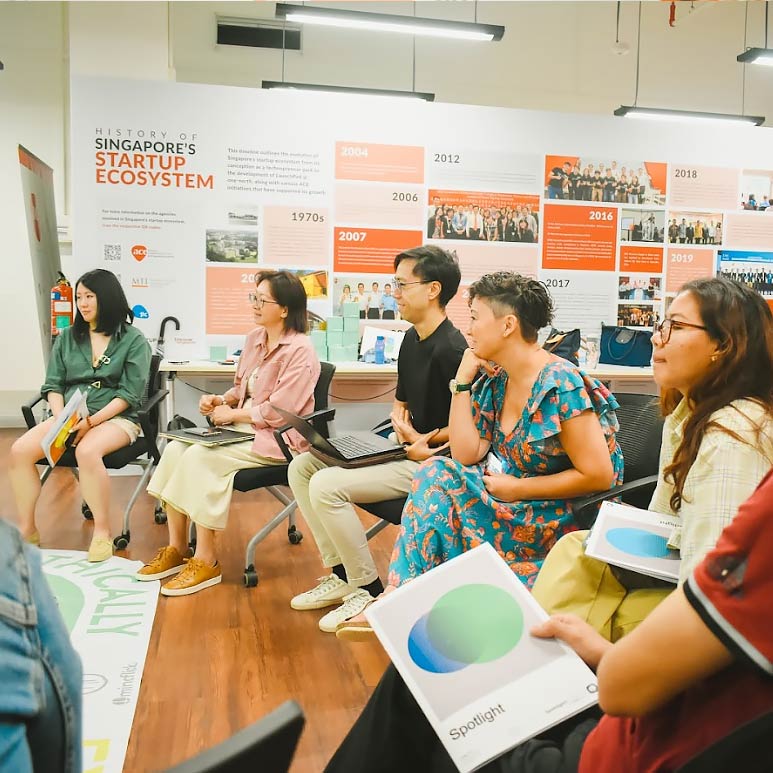
Recognised instruments. Contextual interpretation.
Use established tools without letting the tool drive the work.
Our practitioners draw on recognised instruments where they fit the organisational question. The tool provides a lens; the quality of the debrief, dialogue and application determines whether it creates value.


Spotlightby Mindflick
360° Feedback
Examples are illustrative. Instrument availability depends on the organisational need, appropriate practitioner accreditation, licensing and agreed use of the findings. All third-party marks remain the property of their respective owners.
Three connected assessment areas
Understand the leader, the team and the wider system.
The right level of inquiry depends on the organisational question. An engagement may focus on one area or connect evidence across several levels.
Leadership strengths and development priorities
Understand preferences, capabilities, potential risks and how leadership behaviour is experienced by others.
- Leadership style and behavioural patterns
- Strengths, risks and development priorities
- Stakeholder experience and feedback
- Readiness for broader leadership scope
Possible instruments: Hogan, Spotlight, DiSC and multi-rater or 360-degree feedback.
Team conditions and performance dynamics
Explore how the team relates, decides, coordinates, learns and holds itself accountable for collective outcomes.
- Trust and psychological safety
- Purpose, alignment and role clarity
- Collaboration and decision-making
- Accountability and collective learning
Possible approaches: psychological-safety pulse checks, team-performance diagnostics, interviews and facilitated team inquiry.
Culture and organisational conditions
Understand the wider patterns influencing behaviour, engagement, execution and the organisation’s capacity to change.
- Culture and behavioural norms
- Alignment and ways of working
- Readiness for change
- Conditions enabling or constraining performance
Possible approaches: culture diagnostics, surveys, stakeholder interviews, focus groups and relevant operating evidence.
These are examples rather than a fixed catalogue. We select methods only when they add useful evidence to the decision, development priority or organisational challenge.
Connected across Emerge
Insight that strengthens the wider work.
Assessments and diagnostics can stand alone, but they often create greater value when integrated into leadership development, coaching, team development or organisational transformation.
Leadership 3.0™
Focus development across people and task, present performance and future readiness—and the conversations to Connect, Align, Deliver and Develop.
Leader as Coach
Help leaders understand how their preferences and assumptions influence listening, inquiry, feedback and enabling ownership.
Leading Teams
Surface patterns affecting psychological safety, alignment, team dynamics, accountability and collective performance.
1-to-1 Executive Coaching & Team Coaching
Establish meaningful coaching priorities, enrich reflection and provide proportionate evidence of behavioural or team-level change.
DeepCycle
Support deeper reflection during a significant transition by illuminating strengths, patterns, tensions and purposeful areas for change.
Emerge Advisory
Combine culture and organisational evidence with stakeholder insight to identify systemic conditions, leverage points and transformation priorities.
Assessments support—but do not replace—experienced human judgment, dialogue and contextual understanding.
Our approach
Move from evidence to purposeful action.
We use the Leadership Performance Academy’s practical rhythm to keep assessment connected to the work that matters.
Clarify the question
Define the organisational priority, decisions to be supported, stakeholders and useful evidence of success.
Create the evidence base
Select a proportionate mix of instruments, dialogue, stakeholder insight and relevant organisational evidence.
Translate insight into action
Make sense of findings together and connect them to development, coaching, team practice or organisational action.
Review meaningful progress
Revisit priorities, reinforce useful changes and assess progress without creating unnecessary measurement burden.
Responsible practice and evidence
Use insight carefully—and only where it adds value.
Leadership behaviour
Look for changes in conversations, decisions, feedback, coaching and the way leaders create clarity and ownership.
Team practices
Observe how the team communicates, coordinates, challenges, learns and holds itself accountable.
Stakeholder experience
Use appropriate feedback to understand whether changes are being experienced by the people affected.
Organisational indicators
Connect the work to agreed cultural, people or performance indicators where a credible relationship can be established.
Frequently asked questions
Questions organisational sponsors often ask.
Do you recommend a standard assessment package?
No. We begin with the organisational question and select only the instruments and evidence that can meaningfully support the decision or development need.
Can an assessment be used without a wider programme?
Yes. Assessments and diagnostics can stand alone when there is a clear purpose and appropriate interpretation. They can also be integrated into LPA or Emerge Advisory engagements.
Who receives the findings?
Access is agreed before data is collected. Individual, team and aggregated organisational findings are handled according to the purpose, consent arrangements and confidentiality boundaries of the engagement.
Can you combine several sources of evidence?
Yes. Where useful, we combine assessment data with stakeholder interviews, focus groups, observations and relevant operating evidence to build a more contextual understanding.
Can diagnostics measure the impact of development?
They can contribute useful evidence, but do not prove impact by themselves. We agree meaningful outcomes at the start and use proportionate evidence to understand progress, application and contribution.
Start with the question that matters
What would a clearer picture help your organisation do?
Tell us about the leadership, team or organisational question you are trying to answer. We will help determine what evidence is useful—and what is unnecessary.
Assessments & Diagnostics is one of six connected offerings within the Leadership Performance Academy.