In a world where innovation accelerates daily, the term “future-ready” is often thrown around as corporate jargon. But the truth is, being future-ready isn’t a trend – it’s a critical capability that separates agile, resilient businesses from those left behind.
So, what does it really mean to be future-ready? How can organizations build this capability? And why is it more important than ever?
Let’s unpack what being future-ready means and how you can start building this capability today.
What does “future-ready” actually mean?
At its core, being future-ready means having the skills, mindset, systems, and structures to navigate uncertainty and adapt to change – quickly and effectively.
It’s not about predicting the future. It’s about being ready for anything.
Google Trends shows that searches for “future-ready organization,” “future-ready workforce,” and “how to be future-ready” have surged over the last year – highlighting a growing demand for clarity on the concept.
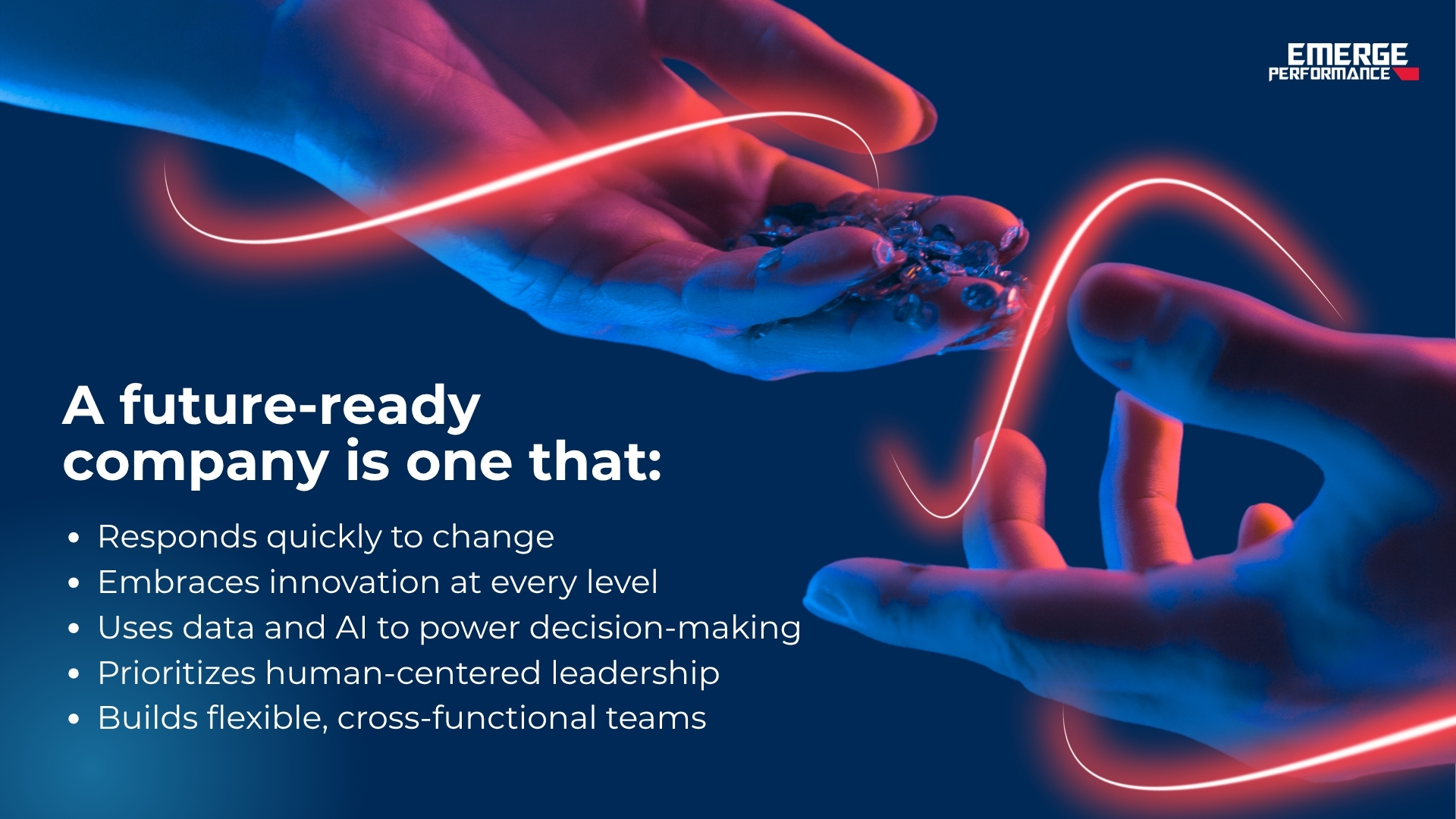
How do you become a future-ready organization?
Here’s what top-performing, future-ready companies are doing right now:
1. Embracing AI and automation
AI isn’t replacing humans – it’s enhancing them. From predictive analytics to smart automation, AI is at the core of future-ready operations. Companies that integrate AI into decision-making and content production are already outperforming competitors.
2. Building organizational agility
Rigid hierarchies are giving way to fluid, collaborative team structures. McKinsey’s “Helix Organization” model – a dual accountability system for people and performance – is a clear example of how agile systems can scale effectively. This shift underscores how organizational agility is becoming a vital driver of future-ready performance.
Want to dive deeper? Check out our webinar with Lalit Jagtiani for an in-depth exploration of what it takes to build truly agile organizations.
3. Designing around the customer
Instead of thinking in terms of channels or products, future-ready companies think in terms of customer journeys. Every decision is made with the end-user experience in mind.
4. Creating a culture of innovation
Innovation shouldn’t live in the R&D lab. It should happen everywhere, every day. Encourage small, fast experiments – and treat failure as a source of insight.
5. Blending tech + human capabilities
Yes, AI is powerful. But so are empathy, critical thinking, and creativity – human skills that machines can’t replicate. The future-ready organization nurtures both.
6. Democratizing data
Everyone, not just data teams, needs access to real-time information. Open data systems empower employees to make smarter, faster decisions.

Ready to future-proof your team?
Curious about what it really takes to be future-ready? We work alongside organizations to strengthen leadership, build agile teams, and develop the capabilities needed to thrive in a changing world.
If you’re rethinking how your organization prepares for the future, we’d love to explore that journey with you. Let’s start the conversation.